What he sees
Four things he reads in the first minute.
Before any scan, he looks: the eyes, the ears, the chin, the teeth. Then he measures on the bone, and treats the structure the face is a map of.
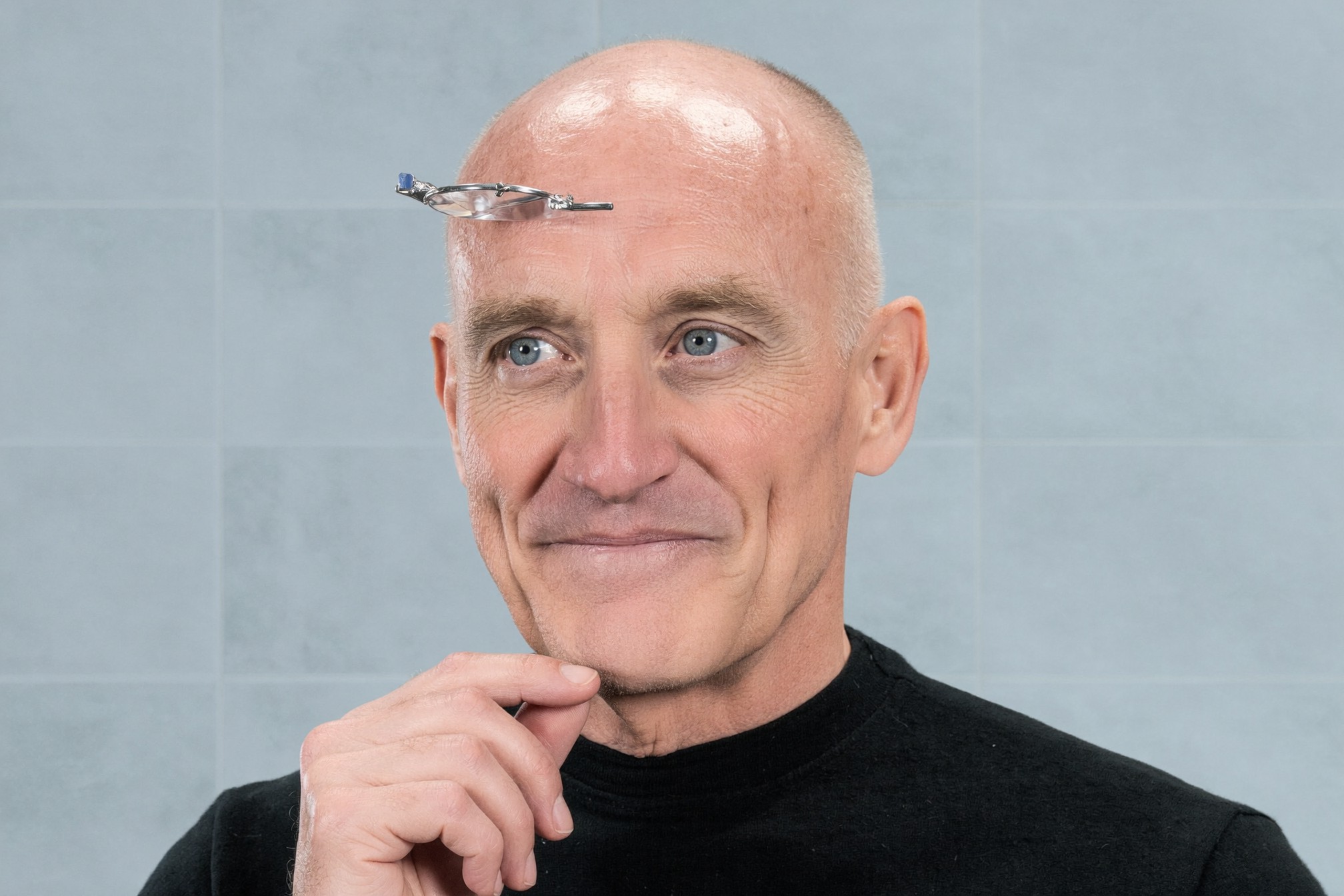
The four questions
He looks first. The measurements come later, on the bone.
A face is a map of the bones beneath it, and the bones are a map of the airway, the jaw and the neck. These are the four things he reads before any scan.
- 01
Are the eyes level?
One eye a little higher than the other is usually the first thing a patient has noticed about their own face. The orbit is a bowl of seven bones, and the position of those bones is what he is reading.
- 02
Are the ears level?
An ear that sits higher, or further out, is a temporal bone that has rotated. The jaw joint sits on that same bone, which is why an ear and a clicking jaw so often travel together.
- 03
Is the chin centred?
Open and close slowly in a mirror. A jaw that swings to one side on the way is following a joint that is not level, not a habit.
- 04
Do the teeth meet in the middle?
The teeth meet two to three thousand times a day, at the end of every swallow. Where they meet decides where the whole system locks.
The mirror
Try the four questions on your own face.
Use your camera as a mirror with two guide lines, look at a photograph of yourself, or just answer the questions.
Hold the phone at eye level. Line your eyes up with the top line. Is one higher?
Drag the photo until the eyes sit on the top line. Is one higher?
Nothing leaves your device. A self-read, not a diagnosis. If something stands out, that is what the consultation measures.
The structure
Twenty-nine bones. One of them is the cog.
The adult skull is not one fused bone. Its sutures stay mobile through life, by about a quarter of a millimetre, and the body is a closed loop that the teeth lock at the end of every swallow. Seven of the bones matter most to what he treats.
eye orbits · pituitary · every cranial bone
A single bone shaped like a swallowtail butterfly, seated in the middle of the skull. Its greater wing forms the back of each eye socket. Because every other cranial bone articulates with it, Dr. Adams calls it the central cog of a watch: move it, and the rest of the movement follows.
the sphenoid · the airway · the face
The upper jaw is a paired bone that interlocks with the palatine bones, and the palatine bones interlock with the sphenoid. That chain is why a dental appliance can reach the cranium at all: level the maxilla and the central cog is asked to move with it.
ear height · jaw joint · balance
The ears sit on the temporal bones. When one temporal bone rotates outward, that ear rides higher and further out, and the jaw joint it carries shifts with it. In the 2024 case report, levelling the ears is what centred the jaw.
eye height · the look of the face
One eye a little higher than the other is usually the first thing a patient has noticed about their own face. The orbit is a bowl made of seven bones, the sphenoid among them, which is why eye level changes when the cranium settles.
clicking · headaches · neck
Two joints that must agree with each other, seated in the temporal bones. Clicking, popping and a jaw that swings to one side are signs the hinges are not level. Treating the joint alone treats the symptom; levelling what it sits on treats the cause.
sleep · snoring · oxygen · the vagus nerve
A narrow upper arch leaves no room for the tongue, so the tongue drops back and the head comes forward to find air. Widening the arch and freeing the bite gives the tongue a place to live, which is why airway, posture and sleep change together.
head tilt · forward head posture · the neck
The top two vertebrae carry the skull, and they follow it. A head that has come forward to find air, or tilted to level the eyes, is carried by a neck that never gets to rest. In the case report the CT before and after was read at C1 and C2.
Worn at night
Not a night guard. Not braces. Not surgery.
The appliance holds the bite open on one side only, so the loop the teeth lock at the end of every swallow stays open while you sleep. Restricted cranial bones get the night to move. By day there is nothing to manage.
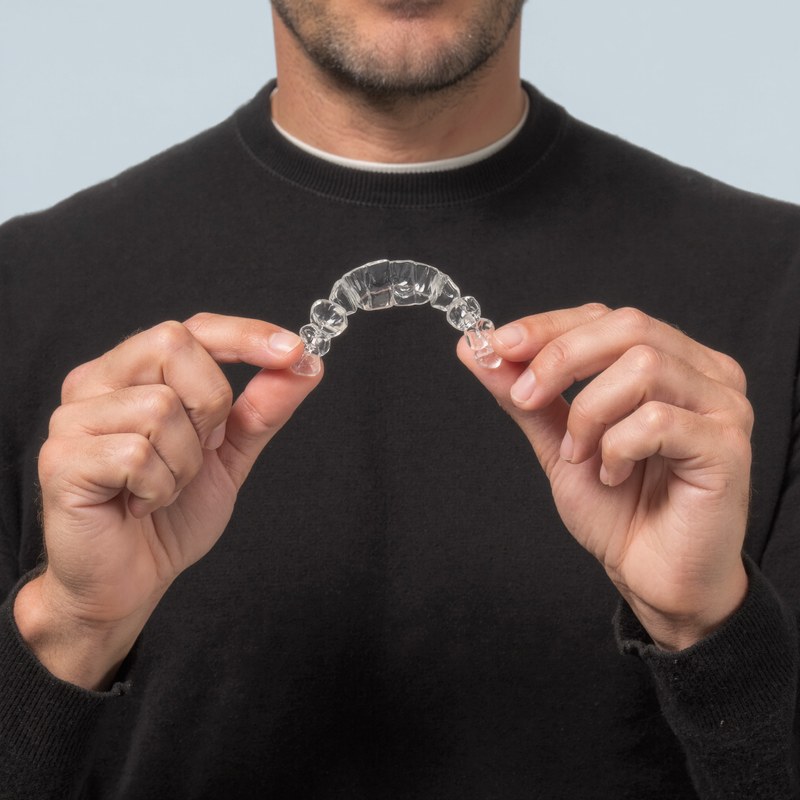
He has been a certified Homeoblock provider since 2010, teaches the Open Loop Cricket to other dentists, and holds a patent on his own unilateral bite-block mouthguard. Which one you wear is decided from your records, not from a catalogue.
- Photographs
- Straight on and in profile, with the triplanar lines: orbital, otic and occlusal planes, and the vertical midline.
- The workup
- A neuromuscular workup with TENS, EMG and joint vibration analysis, and a sleep screen.
- The plan
- Explained in the room, with the records taken the same morning so the appliance can be made from one visit.
Request a consultation
Tell him what brings you.
Courtney replies within one business day to find a morning that works. Out-of-town patients usually pair a Monday with a weekend in Indianapolis.
(317) 580-9222Monday to Wednesday, 8:30 am to 5:00 pm